
As someone who struggles with human interactions, I’ve always found the function of taboo in society intriguing. Mostly because I wonder if people know why they are reacting to the taboo. I usually follow a line of questioning that goes: Why do we need to fit into molds made by these societal norms? Yes, you should adhere to guidelines and rules to keep yourself safe, but WHO determines what is safe? WHO is making these rules, and who benefits from this way of thinking? Why can’t we talk about these taboo subjects in a way that helps society think critically versus forced silence and compliance? So, when I began reading speculative fiction by authors of oppressed groups, I realized I was not alone in this line of questioning. Systemic oppression and all the -isms you can think of already create an unspeakable narrative. Why not step further into the taboo and use it to create change?
Taboos are topics, behaviors, etc., that are deemed socially inappropriate and ostracize those who participate in said behavior. There are universal taboos like murder, SA, and harm to children. There are also culturally specific taboos, like speaking about mental illness in the Black community. The 2012 Apex magazine article “You’re Not Supposed to Write That: Taboos in Speculative Fiction” explains this in more detail. Taboos are often a way to create boundaries for societal norms; therefore, society can’t take them lightly in our media consumption. Unfortunately, this is not always the case.
I prefer reading speculative fiction with taboos written by Black, Indigenous, and other Authors of Color. This preference is not because those stories depict marginalized people doing taboo things but because of how taboo is used to promote social commentary. I’ve said many times that most speculative fiction written by white authors feels like co-opted oppression, so when I read those books with taboos in them, it feels like a gimmick. A book by a white author may have some commentary, but if it reads like white people are being oppressed by white people or someone who is considered an “other,” I find it difficult to take it seriously. How can you envision a new world or social system while perpetuating systemic biases in your work? Also, many white writers reduce taboo as a ploy to separate themselves from the herd, adding a bit of seasoning to their lackluster creations. Because taboos affect societal expectations, they should be analyzed critically and inclusively rather than for clout, even in literature.
BIPOC authors in speculative fiction used taboo to assist the reader in deconstructing our world. As an American, a solid argument can be made about our indoctrination into an imperialist mindset, the white beauty standard, the white-washing of history, etc. These mindsets directly and indirectly affect how we interpret and navigate the world. To imagine new possibilities, the reader has to free themselves from our current belief structures, and using taboo is an efficient way to do that. In one story, this device allows the reader to forgo what is considered pure evil and righteous and decide for themselves what is best for the character and, by extension, for our reality. These new models of thinking lead to new boundaries, creating change for future generations.

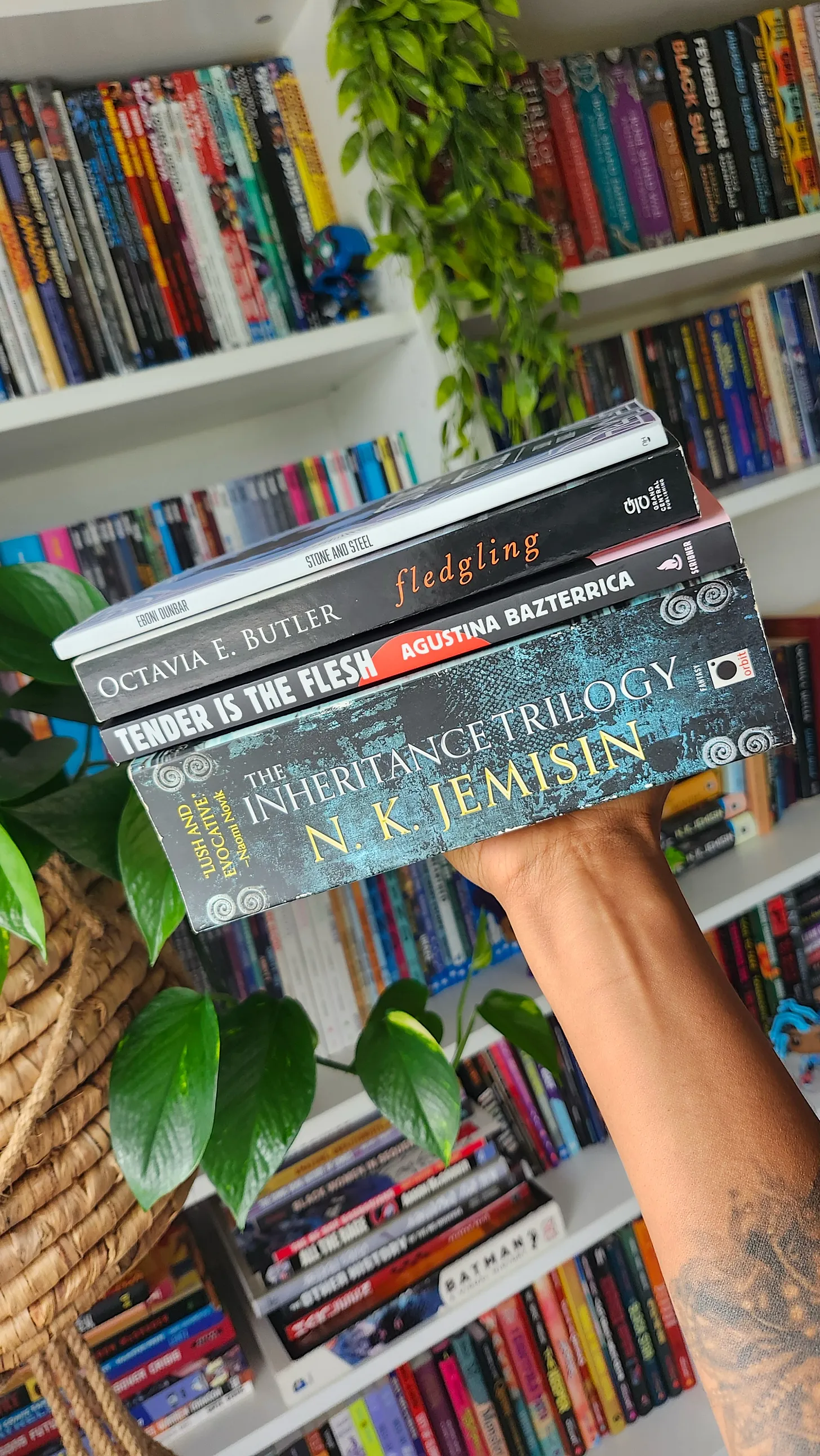
Let’s take Octavia Butler’s work. Butler is a master class in using taboo to help the reader deconstruct social concepts in literature. One of the hardest texts I’ve ever had to read was Fledgling. Fledgling is about a 53-year-old vampire, Shori, who looks like a child. The very detailed physical description is hard to accept, knowing that this vampire is having relations with a man, but, in hindsight, it’s necessary. Butler wants us to be shocked that this grown woman is treated like a child in some areas and an adult in others. Shori’s agency is constantly under attack for most of the text, and it is difficult to come to any other conclusion because of the taboo. Butler doesn’t want us to take any message, any commentary from the novel, other than the one she explicitly set out to write.
NK Jemisin’s use of taboo is phenomenal in the Inheritance trilogy. The entire trilogy navigates the tumultuous relationships among gods and between gods and humans. All of the gods have sexual and romantic relationships with each other, including parents and siblings. As off-putting as that behavior is in our reality, why is it so amazing in this series? The taboo behavior between the gods reminds us that they are, in fact, gods. They aren’t bound to mortal social norms. They operate in a space that we mere mortals can’t fathom, and the taboo is a stark reminder of when these same gods interact with humans or are forcibly made to serve humans, especially humans with lighter complexions. So when these gods begin conversing about their future and what needs to happen, the reader can imagine a new future with these gods and take that same skill into other areas of life, having already been stripped of all mortal roles and expectations.
An argument can be made for the excessive use of taboo and how it can slip into pessimism (see The Freedom Race by Lucinda Roy) or scandal for scandal’s sake (see *insert white fantasy here*). Still, I believe good writers can strike a balance in using this controversial yet popular device. It all comes down to ‘why’. Asking why is the building blocks of critical thinking and inquiry. It empowers readers to reflect and determine whether the taboo helps or harms the message.
So I leave you with this advice: To writers, use the taboo and break norms to argue for new possibilities. To readers, allow these stories to envelop you and spark your metamorphosis into something and someone new. I know I’ve been better for the change.
Apex Magazine Supplemental Article link here
Leave a Reply